


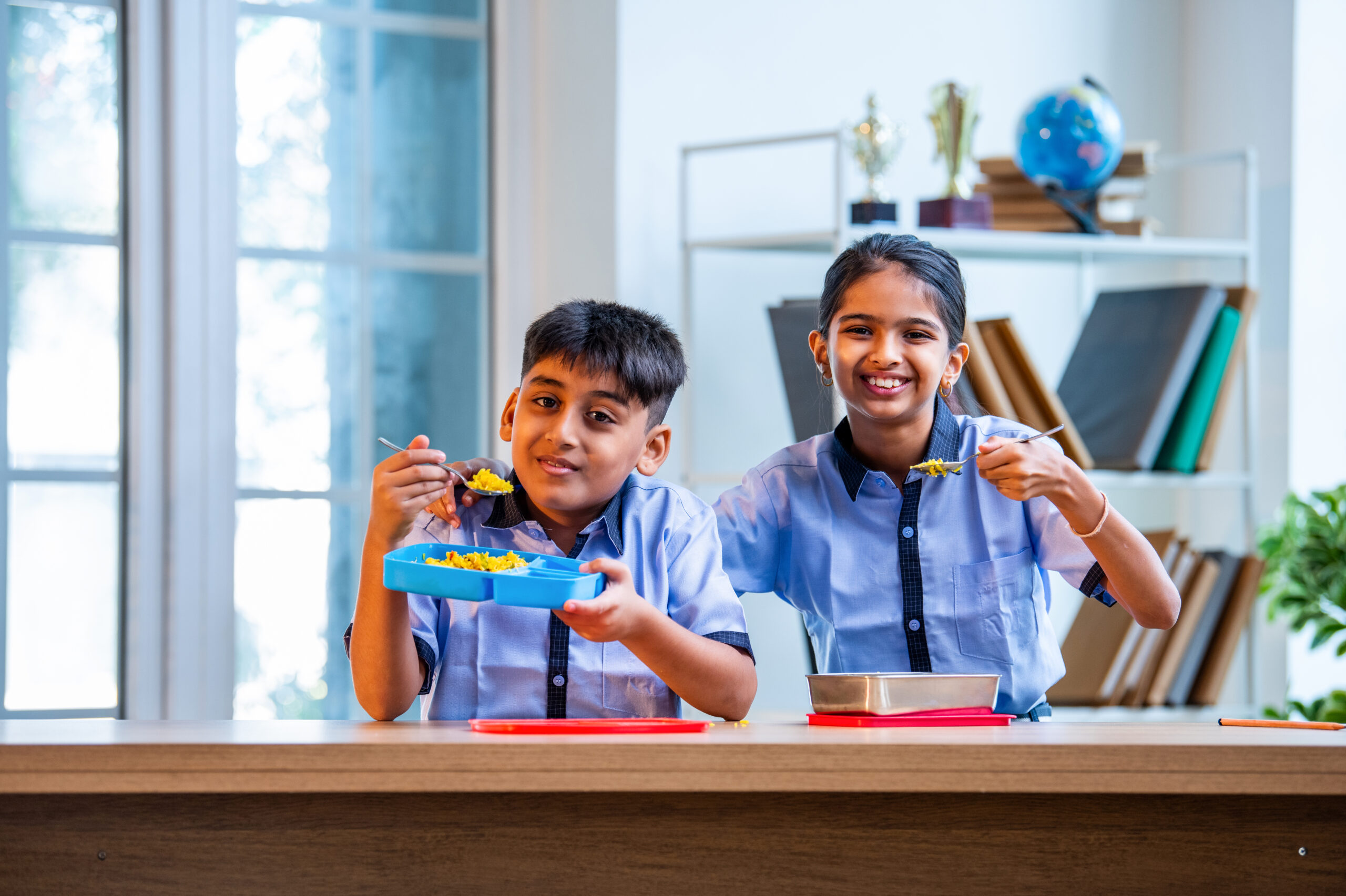

Reviving the Indian Dinner Table: A Simple Way to Raise Confident Communicators
There is a quiet truth most Indian families forget.
Some of the country’s finest communicators the ones who hold rooms, lead teams, and speak with ease were not built in classrooms or coaching centres. They were built across plates of dal-chawal, between bites of roti, in the noisy, layered conversations of an Indian family dinner.
Long before language apps and online courses, this was where children learned to listen, argue, joke, persuade, agree, disagree, and belong. The dinner table was a soft stage. Every child got a turn.
That stage still exists in your home. It only needs to be brought back to life.
Why the Indian Dinner Table Is Quietly Disappearing
Walk into many homes today and you will find a different scene. The TV plays in the background. Phones rest beside plates. Meals happen in shifts one child finishes early, another eats later, a parent eats while replying to a work message.
The food still arrives on time. The conversation does not.
For children, this shift carries a hidden cost. They lose the daily practice of expressing themselves to people who genuinely listen. They lose the chance to hear different points of view across generations. They lose the small, repeated moments that build a confident communicator over years.
The good news is that this can be rebuilt in a week.
What Makes the Dinner Table Such a Powerful Classroom
Unlike a school setting, the dinner table offers something rare:
- No marks
- No comparison
- No pressure to perform
Children speak because they want to be heard, not because a bell will ring. It also offers something every great communicator needs early in life:
A Real Audience
Parents, siblings, grandparents—often all at once.
A Safe Space
A place where ideas are welcomed before they are judged.
A Varied Vocabulary
From a grandmother’s idioms to a teenager’s slang, all in one meal.
Real-Time Feedback
Laughter, questions, follow-ups, and gentle disagreement.
Repetition
The most powerful learning tool ever invented.
Twenty minutes a day. Three hundred and sixty-five times a year.
That is over a thousand hours of communication practice across a childhoodand it costs absolutely nothing.
7 Simple Dinner-Table Prompts That Build Strong Communicators
These are gentle, open-ended questions designed to draw out thought, expression, and connection.
Try one a day for a week and watch the conversations bloom.
1. What was the best part of your day and the most difficult part?
This single question teaches your child two skills at once:
- The ability to identify joy
- The courage to share struggle
Over time, it builds emotional vocabulary far stronger than any worksheet.
2. Tell me about someone you helped today, or someone who helped you.
A quiet way to grow empathy and gratitude.
Children begin to notice kindness around them and start practising it more naturally.
3. If you were the principal of your school for one day, what would you change?
Pure imagination training.
This prompt invites your child to think critically, form an opinion, and defend it—three skills every modern classroom and future career will demand.
4. What’s one thing you saw today that surprised you?
Curiosity is a muscle.
The more often children are asked what surprised them, the more they begin to look at the world with fresh eyes—and the more interesting their conversations become.
5. Tell us a story from today, with a beginning, middle, and end.
A subtle structure that teaches narrative thinking.
Children learn to:
- Organise their thoughts
- Build suspense
- Deliver a clear point
These are the foundations of public speaking, presentations, and writing.
6. If you could ask anyone at this table one question, what would it be?
This flips the dynamic.
Suddenly your child becomes the interviewer. They learn:
- How to listen
- How to ask meaningful questions
- How to keep a conversation flowing
These are skills that quietly carry them through life.
7. What’s something you want to try tomorrow that you haven’t tried before?
Children who name their intentions out loud act on them more often.
This prompt builds:
- Decision-making
- Courage
- Forward thinking
All through one casual dinner-table conversation.
The Cultural Advantage Indian Families Have
Indian homes carry an edge that many global edtech blogs miss entirely.
In a joint family—or even in a close-knit nuclear family—children grow up speaking to a remarkable range of personalities.
They hear:
- A grandmother’s storytelling
- A father’s news commentary
- An aunt’s gossip
- An uncle’s jokes
- A cousin’s school drama
Each voice teaches a different rhythm, a different register, and a different way of being heard.
Few classrooms in the world offer this kind of natural communication training.
When parents bring children fully into these conversations instead of letting them eat in silence with a screen, that cultural advantage compounds beautifully.
By the time a child enters a boardroom, a college interview, or a stage, they have already practised speaking to grandparents, peers, and elders with equal ease.
This is a gift only Indian homes can give.
Use it generously.
Beyond Dinner: Extending the Classroom
Once the dinner-table habit returns, the same principle can travel further.
Weekend Mornings
Turn breakfast into story circles.
Car Rides
Create “Tell me about a time when…” conversations.
Festivals
Encourage children to share what the day means to them.
Power Cuts
Transform them into candle-lit storytelling sessions—the kind today’s children rarely experience.
Each small ritual builds a child who can:
- Express themselves clearly
- Listen with attention
- Connect meaningfully with others
Across any setting, any age group, and any room.
A Final Thought for Parents
A confident, well-spoken child is rarely the product of one big program.
They are the product of hundreds of small, daily moments where their voice was welcomed and their thoughts were taken seriously.
Your dinner table is one of the most powerful classrooms your child will ever have access to.
It costs nothing.
It needs no curriculum.
It only needs your presence, your attention, and the willingness to ask one good question every single day.
The next time the family sits down to eat, look up from the screen. Look across the table. And ask.
The conversation that follows might surprise you.
It might shape your child for life.