


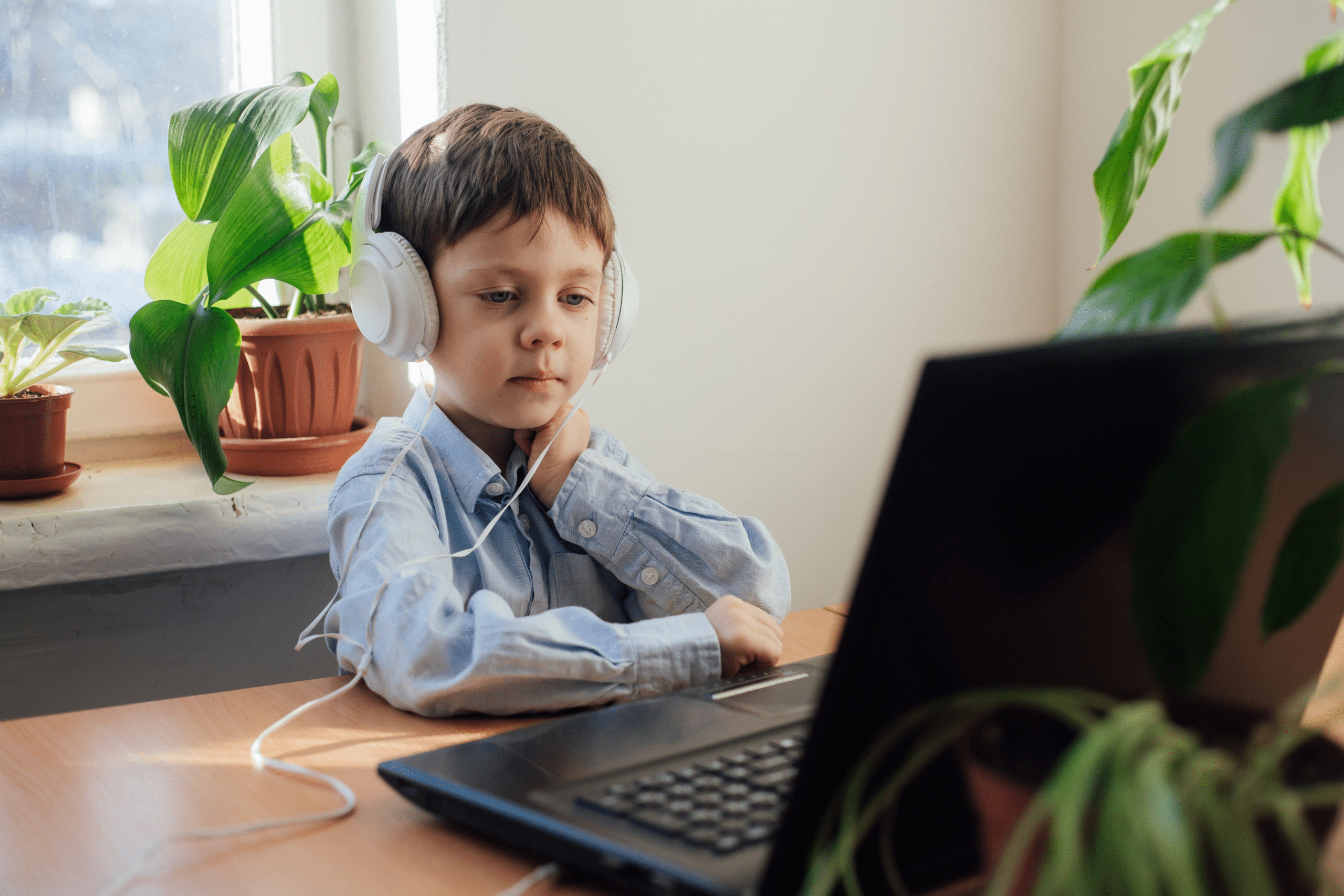

Your child watches four hours of content a day.
Cartoons in the morning. YouTube during meals. Reels between homework. The screens are colourful, the voices engaging, the stories endless.
Now ask a quieter question:
Who is your child actually talking to?
In most modern Indian homes, the answer has shifted. Children are absorbing more language than ever before and producing less of it. They are watching expressions without practising it. They are hearing conversations without joining one.
This blog is a calm, honest look at what screen time is doing to your child’s communication and the simple shifts every parent can make today.
What the Research Tells Us
Recent global studies show a clear link between high screen exposure in early childhood and slower language development. The American Academy of Pediatrics recommends zero screen time for children under 18 months, and just one hour of quality content for ages 2 to 5. In India, the average screen time for children aged 5 to 12 has crossed three hours a day.
The pattern matters more than the number. Every hour of passive watching is an hour your child is not spending in conversation, play, or face-to-face interaction the moments where speech and confidence are truly built.
A child becomes a strong speaker the way a swimmer becomes strong in water through practice, not observation.
The 4 Quiet Signs to Watch For
Most parents notice screen impact only when it becomes loud. The early signs are quieter and far more telling.
- Shorter attention in conversations your child’s eyes drift within a minute of being spoken to.
- A smaller, borrowed vocabulary – they repeat catchphrases from cartoons but pause when asked to describe something in their own words.
- Fewer questions asked – curious children ask. Screen-saturated children consume.
- Reduced eye contact and expression – screens never demand these, so the muscles for them quietly weaken.
If two or more sound familiar, the next section is the most important part of this blog.
The 1-Hour Swap Rule
The goal here is not to remove screens. The goal is to swap one hour a day with something that grows your child’s mind, voice, and presence.
Replace that hour with any of these:
- 15 minutes of reading aloud – builds vocabulary, fluency, and a daily bonding ritual.
- 15 minutes of storytelling – take turns inventing a story, one sentence at a time.
- 15 minutes of real conversation – a walk, a drive, a dinner without devices.
- 15 minutes of creative play – drawing, building, role-play, cooking together.
Four small windows. One transformed hour. Within weeks, the difference will show in how your child speaks, listens, and looks up when you enter a room.
Why Live, Human-Led Learning Always Wins
Recorded content can entertain and inform. What it cannot do is respond.
A great teacher pauses when a child looks confused. A live mentor changes course when a child loses interest. A real conversation builds, adapts, and pulls a child forward at their own pace.
Speaking skills grow most powerfully in live environments where a child rehearses an answer, says it out loud, hears the response, and tries again. That feedback loop is the heart of communication. No screen replicates it.
A Simple Screen-Time Framework for Indian Families
- Below age 5: Under 1 hour a day. Choose slow-paced, language-rich content. Watch with your child whenever possible.
- Ages 5 to 10: Cap at 1.5 hours on weekdays, 2 hours on weekends. Keep dinner tables, car rides, and the first hour of the morning screen-free.
- Ages 10 to 16: Shift from time limits to purpose limits. Ask, is the screen being used for creation, conversation, or consumption? Encourage the first two.
For every age, replace one hour daily with something active, and keep one full screen-free day each week if possible.
A Final Thought for Parents
The screens in your home are not your enemy. They are simply louder, faster, and more available than any childhood activity has ever been before. They have quietly taken over the space where conversation used to live.
Reclaiming that space takes one steady decision, repeated daily give your child one real hour every day. A book. A walk. A meal without devices. A live class with a mentor who truly engages with them.
A childhood spent watching builds a passive adult. A childhood spent engaging builds a confident communicator who can hold any room.